

By Hervé Gobou
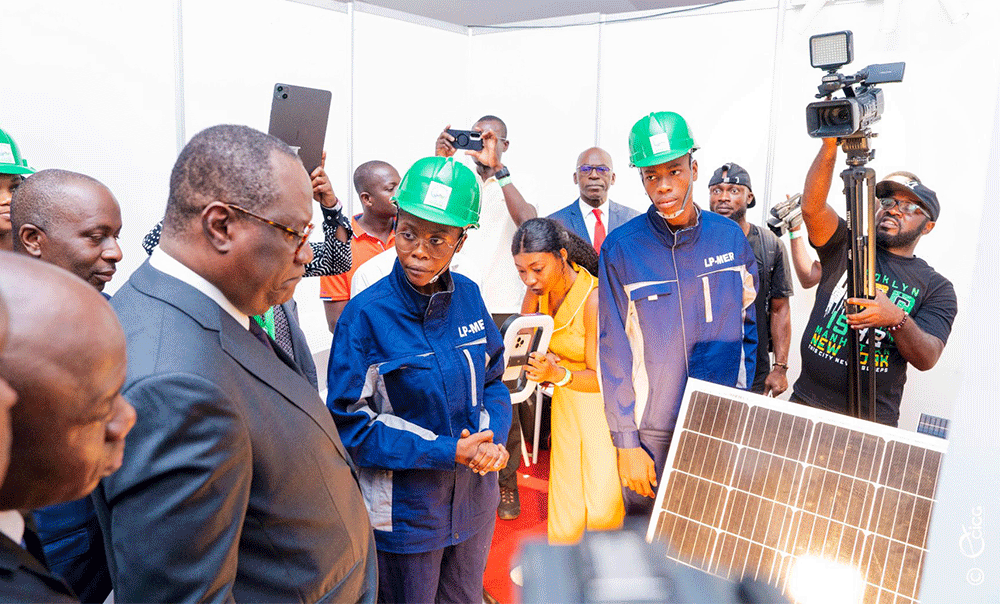
The issue of industrialization was at the heart of the first edition of the National Technical Education Fair (SNET 2026), held from April 25 to 27, 2026, at the Technical High School of Abidjan. One of the challenges Côte d’Ivoire aims to address by 2030 is making technical education the driving force behind its industrial development.
Côte d’Ivoire aspires to become a major industrial hub in West Africa. However, this ambition cannot be achieved without a skilled workforce capable of meeting the demands of modern industries. Technical and Vocational Education and Training (TVET) therefore emerges as a key driver of the country’s industrial transformation.
Today, local industries—including agribusiness, construction, textiles, energy, and information and communication technologies (ICT)—face a shortage of specialized technicians. While graduates from general education programs often struggle to find employment, companies are seeking candidates who are immediately operational. This mismatch highlights the urgent need to place technical education at the center of the national development strategy.
Reforming Education to Improve Training
The first step is to reform curricula so that they align with industrial standards. Programs must incorporate practical modules, digital skills, and expertise that can be directly applied in the workplace.
Work-study training, which combines classroom instruction with on-the-job experience, is a particularly promising approach. It enables learners to acquire practical skills while adapting to real market conditions.
Furthermore, the creation of regional centers of excellence specialized by sector—such as agro-industry in Daloa, textiles in Bouaké, and ICT in Abidjan—would strengthen the connection between education and local economic needs. These centers could serve as incubators for industrial talent.
To achieve this, technical high schools and training centers must be renovated and equipped with modern workshops. Laboratories dedicated to mechanics, electrical engineering, industrial maintenance, and robotics would allow students to train under conditions similar to those found in modern factories.
A close partnership between the government and the private sector is essential. Businesses could contribute to equipping training institutions, provide input on curricula, and host interns, ensuring a better alignment between education and employment.
Enhancing the Image of Technical Education
Beyond infrastructure, it is crucial to change public perceptions of technical education. Too often regarded as a “second-choice” pathway, it should instead be promoted as a route to excellence.
Awareness campaigns, national innovation competitions, and excellence scholarships can help restore the prestige of the sector.
“Choosing technical education means choosing the future,” says an executive from the agribusiness sector, convinced that technicians are the true builders of the national economy.
Investing in technical education means investing in competitiveness. A skilled and job-ready workforce will help reduce youth unemployment, stimulate industrial entrepreneurship, and strengthen the country’s economic sovereignty.
In the long term, Côte d’Ivoire could position itself as a regional industrial hub capable of competing with the continent’s leading emerging economies.