
By Roger A.
About 45 kilometers east of Cairo, deep in the desert, a titanic city is rising from the ground. Skyscrapers piercing the horizon, vast parks, and luxurious residential districts are taking shape. Designed as a smart city powered by renewable solar and wind energy, it aims to be highly connected and ultra-secure, equipped with 6,000 cameras driven by artificial intelligence. The stated goal: modernize governance and strengthen control.
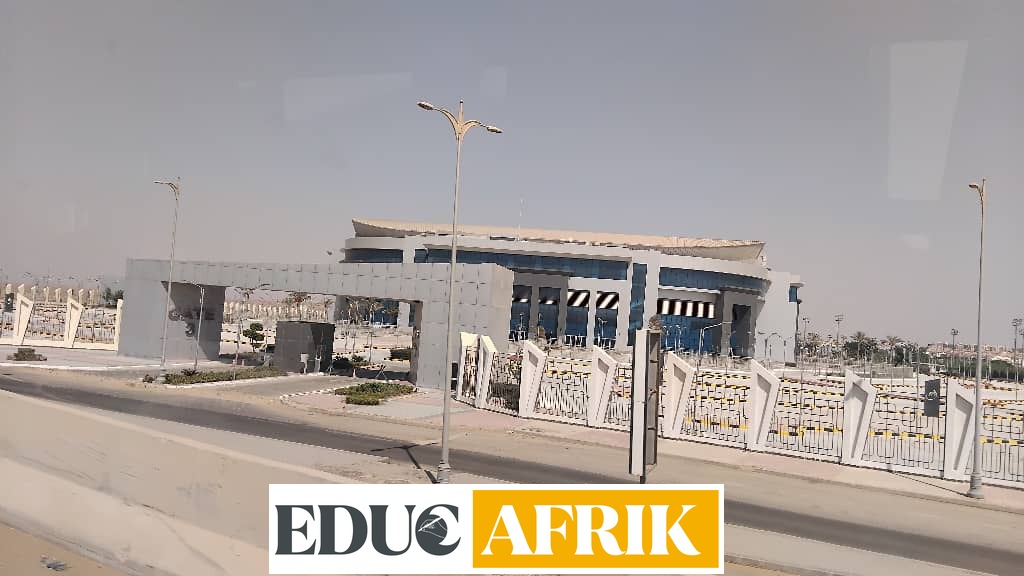
At the heart of the project lies the Green River Park, a vast green corridor stretching over 35 km and covering 2,509 hectares. It is expected to welcome nearly 370,000 visitors daily. Nearby, a monumental 90,000-seat stadium is planned, aspiring to become the largest in Africa.
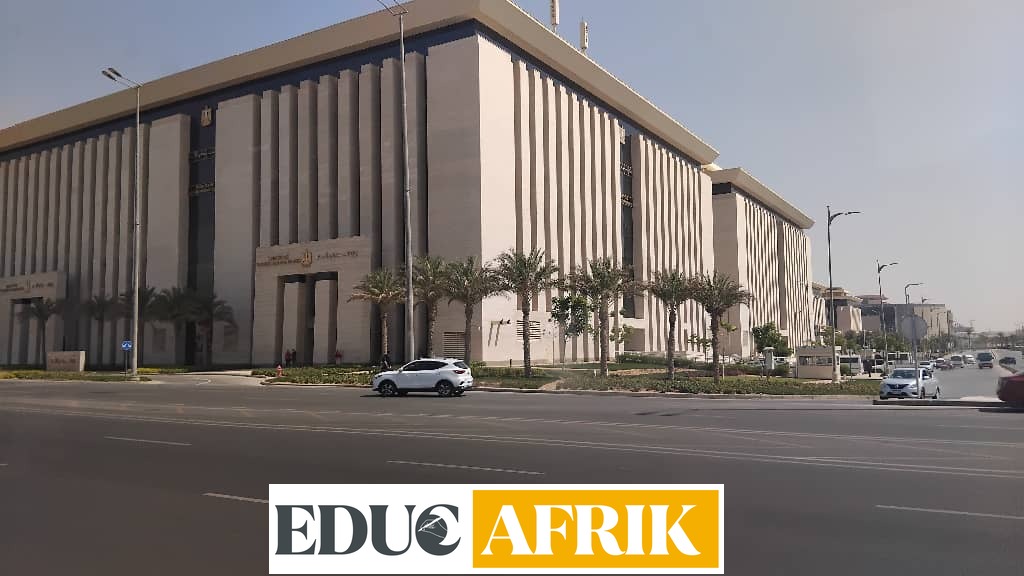
This New Administrative Capital (NAC) is not only home to futuristic towers; it already hosts more than 100 government institutions, including 30 ministries relocated from old Cairo.
“The New Administrative Capital: A response to decongest old Cairo”
Cairo, a millennia-old megacity and one of Africa’s oldest capitals, is struggling under the weight of its history and population growth. Chronic traffic jams, suffocating pollution, and overcrowded infrastructure make daily life increasingly difficult. Every day, millions of residents saturate its streets, markets, and public transport systems.
In this context, the NAC was envisioned as a breath of fresh air. The government presents it as a modern hub capable of competing with the world’s leading capitals. The original plan was ambitious: a brand-new governmental district, a financial center, a convention hub, and the construction of Africa’s tallest tower. It also includes the relocation of ministries, parliament, and embassies to build a functional, secure, and future-oriented capital.
This vision is driven by President Abdel Fattah el-Sisi, as part of his “New Republic” strategy: breaking with the past, overcoming urban decline, and propelling Egypt into a new era of modernization and prosperity.
“A monumental project launched in 2015”
Officially launched in 2015, the project spans between 700 and 950 km². It represents a remarkable feat of engineering and logistics. Thousands of workers operate day and night under the harsh desert sun. The initial budget, estimated at $58 billion, funds dozens of simultaneous construction sites moving at a rapid pace. Egyptian, Emirati, and Chinese construction companies are involved, as cranes dominate the skyline.
Gradually, the outline of the new capital is taking shape: gleaming towers, monumental roads, and carefully planned residential districts.
Beyond urban planning, the NAC is part of a broader economic and political strategy: attracting foreign investment, creating jobs, and positioning Egypt alongside major urban showcases of the Arab world such as Dubai and Doha.
A city already inhabited, a model of future urbanism
The government district has already opened to early civil servants. The business district is attracting banks and companies, while the first families are moving into residential areas. The NAC is designed as a laboratory of modern urbanism, featuring smart management of water, energy, and transport systems. The ambition is to create a model of sustainability and efficiency that could inspire other African nations.
The New Administrative Capital is both an architectural masterpiece and a bold political gamble. A symbol of modernity, it reflects Egypt’s determination to reinvent itself and reconnect with the ambition of its pharaonic builders. For some, it represents a model of African development and a blueprint to follow.
History teaches us that great capitals are not created by decree alone; they are shaped by commerce, culture, and the people who give them identity. The question remains: will the NAC become a vibrant living city, or remain a state-designed showcase?
Meanwhile, construction continues, lights illuminate the desert each night, and Egypt moves forward on a path paved with concrete, ambition, and transformation.
Cairo, a megacity of over 20 million inhabitants, is suffocating under pollution and traffic congestion. The new capital aims to ease this pressure by relocating administrative institutions away from the historic center.